Calls answered 24/7 by a real person
Water Damage Restoration in Saratoga Springs, UT
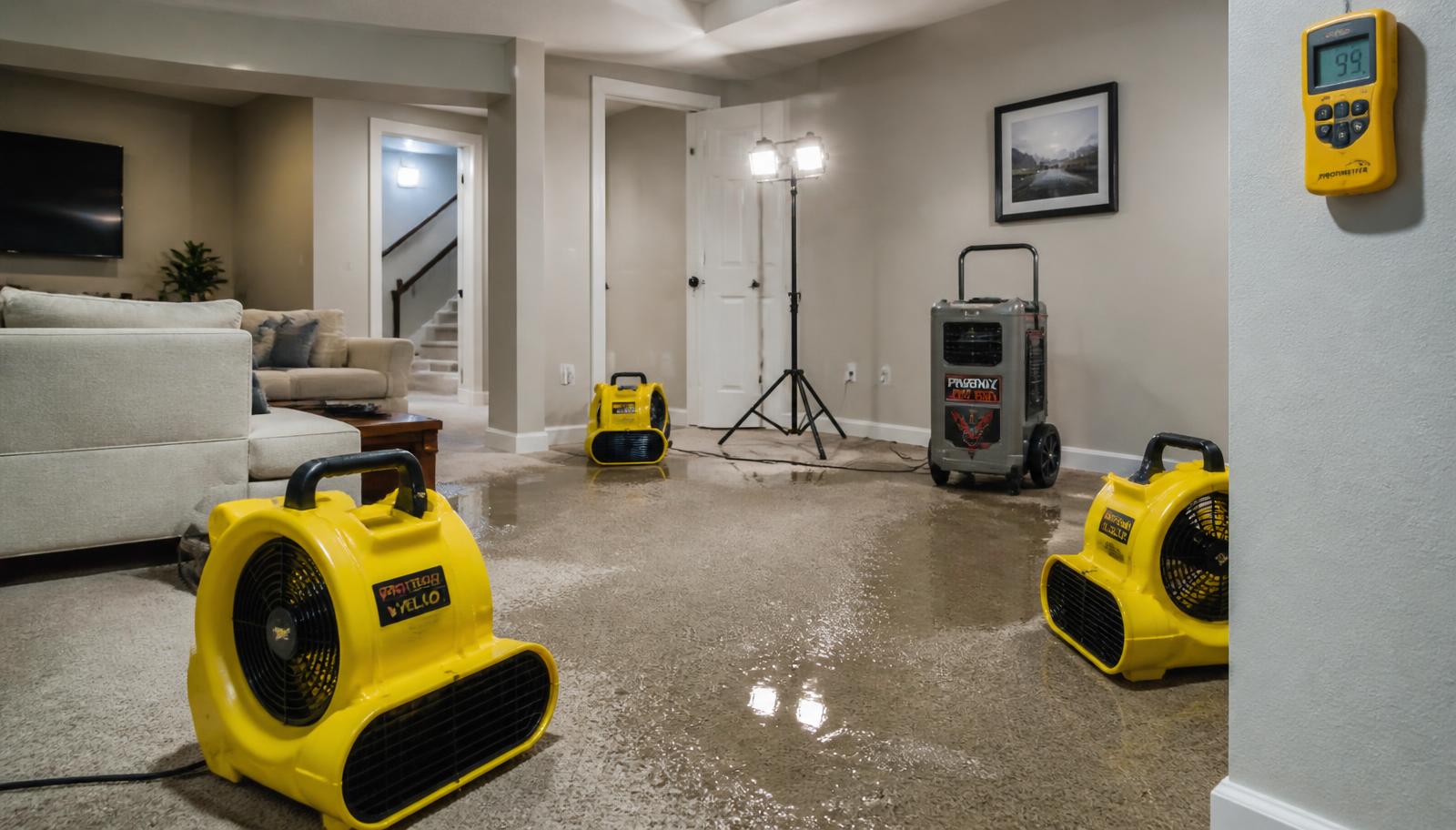
Standing water in a finished basement gets worse by the hour. We pull the water out, dry the structure, and photograph every step for your insurance claim — and we only cover Saratoga Springs and northwest Utah County.
- Free assessment
- No obligation, no pressure.
- Upfront pricing
- Explained before work starts.
- Claim documentation
- Photos and readings, dated.
If water is moving right now, do these three things
Shut off the water
For any supply-side leak — a pipe, a hose, a water heater — close the main shutoff. That is the universal first step, before anything else.
Stay out of water near power
If water is near outlets, a panel, or a furnace, do not wade in. Kill power to that area only if you can reach the breaker safely and dry.
Photograph before you move anything
Wide shots, then close-ups, then the source. Note the time. This is the evidence your adjuster will ask for later.
Then call. We will tell you what to expect before anyone arrives.
The part nobody explains
Insurance, in plain English
Most people standing in a wet basement do not know the order of operations. Here it is: call us first so drying starts, then open your claim. We work alongside your insurer and hand over what they need — dated photos, moisture readings, a list of affected materials, and daily drying logs.
What we will not do is tell you what your policy covers. That is your insurer's call. We document the loss honestly so the decision is made on facts, not memory.
Sudden and accidental damage
Burst supply lines, failed water heaters, overflowing washers. Usually covered.
Gradual leaks
A slow drip behind a wall that finally showed itself. Usually not covered.
Outside water
Surface flooding and runoff generally need separate flood coverage.
Either way
We document it the same. Coverage questions belong to your adjuster, not to us.
What we handle
Emergency Water Extraction
Standing water pulled out fast, then dried and monitored until it is gone.
EmergencyBasement Flood Cleanup
Finished basements saved where we can, documented where we cannot.
Frozen & Burst Pipe Cleanup
Winter supply-line breaks that ran for hours, cleaned up end to end.
Mold Remediation
The follow-on job when water sat past the 24 to 48 hour window.
Sewage Backup Cleanup
Contaminated water handled as a health hazard, not a mopping job.
The clock that decides the job
Mold can start within 24 to 48 hours
Per EPA-aligned guidance, mold can begin growing on wet materials within 24 to 48 hours of water exposure. Materials dried inside that window can often be saved. Past it, remediation frequently becomes part of the job — which is why speed, not equipment brand names, is the whole story in this trade.
First minutes
Stop the water. Document.
First hours
Water wicks up drywall and under flooring.
24–48 hours
The mold window opens.
Past 48 hours
More gets removed instead of dried.
Why a Saratoga Springs company, and not a Provo one
Search for water damage help here and you get service-area pages from companies based in Provo, Orem, and Salt Lake. This city is the outer edge of their radius. With every ranking company based somewhere else, homeowners on the northwest shore of Utah Lake face a real response-distance disadvantage exactly when time matters most.
We built this site around one place instead: Saratoga Springs and northwest Utah County.
A young lakeshore city
Saratoga Springs has grown to roughly 66,000 people at close to 9–10% a year, stretched along the northwest shore of Utah Lake. Nearly all of the housing stock is recent construction.
Finished basements are standard
Like most new Utah construction, homes here typically include basements — and finishing that basement is a common local investment. Any water event becomes damage to finished living space, not a concrete cellar.
Freeze-thaw winters
Utah's freeze-thaw winters make frozen and burst pipes a recurring cause of home flooding statewide. Vacant homes, exterior hose bibs, and pipes in unheated spaces are the usual culprits.
What each season brings
Winter
Burst-pipe season. Hard freezes plus vacation-empty homes make the year's worst losses, because a broken supply line can release water for hours before anyone finds it.
Spring
Snowmelt and runoff add groundwater and drainage-driven seepage to the picture, which shows up as wet basement edges rather than a single obvious break.
Summer
Water heaters and washing machine hoses fail on their own schedule. These are the quiet, year-round drivers.
Fall
Supply-line breaks continue, and it is the last chance to protect hose bibs and unheated spaces before the first hard freeze.
Where we work
Serving Saratoga Springs and northwest Utah County.
Questions we get at 2 a.m.
Who do I call first — my insurance company or a restoration company?
Call a restoration company first, then your insurer. Water keeps moving while you sit on hold, and drying is what limits the loss. We start the work and photograph the damage as we go, so you have dated evidence when you open the claim. Then call your insurance company and give them our documentation.
Does homeowners insurance cover water damage in Utah?
It depends on the cause. Sudden, accidental water — a burst supply line, a failed water heater, an overflowing washer — is usually covered. Slow hidden leaks and outside flooding usually are not. We do not decide your claim, and we will not promise an outcome. We document the cause and the damage either way.
How much does water damage restoration cost?
Cost tracks four things: how much water there is, how long it sat, what it soaked, and whether it was clean or contaminated. A small clean-water spill dried in place costs far less than a finished basement that sat wet for two days. You get an upfront price before work starts, and no obligation to book.
Water where it shouldn't be? Start the clock.
Calls answered 24/7 by a real person. Tell us what you're looking at and we'll walk you through the first steps on the phone — including what to photograph before anything gets moved.
- Free, no-obligation assessment of the damage.
- Upfront pricing explained before work starts.
- We document the loss for your insurance claim.
- If we're not the right help, we'll tell you who is.